
200 Parents Said No to Chromebooks
The District Rewrote the Rules
A quiet suburb of Philadelphia just became a flashpoint in the growing national revolt against edtech, and what’s happening there is worth every parent in America paying attention to.
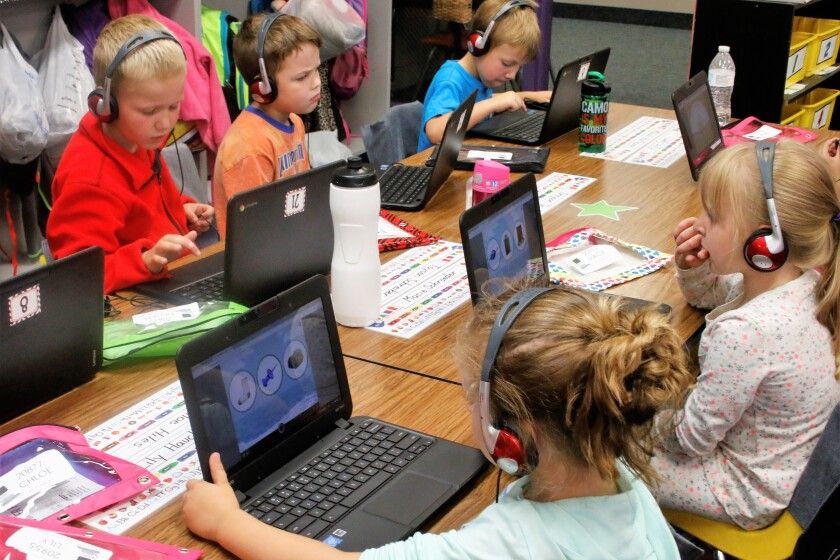
Over 200 families in the Lower Merion School District have signed a petition demanding the right to opt their children out of the district’s mandatory one-to-one Chromebook program. Their concerns are specific and documented: kids making no academic progress on programs like DreamBox, children who can’t focus and spend class time gaming or messaging friends, second graders who aren’t developing the fine motor skills that come from holding a pencil, and middle schoolers on Chromebooks four to five hours a day.
One parent described the software as “very dopamine-driven.”
That’s not a curriculum.
That’s a product.
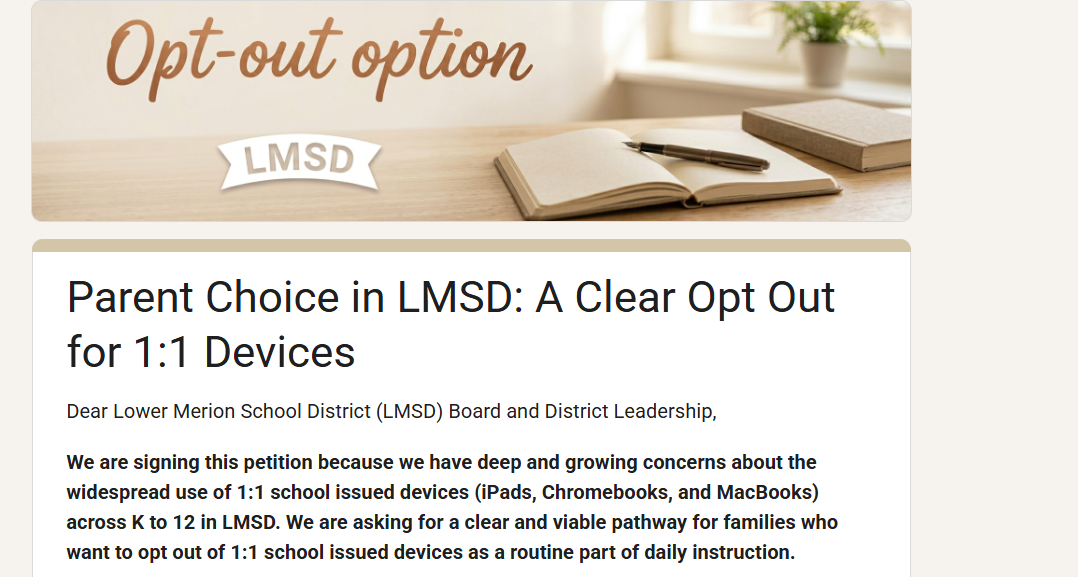
The district’s response was to tell parents they couldn’t opt out, and then to move to rewrite their own policy, which had previously given families exactly that right.
The rules protected parents. Parents tried to use them. So administrators moved to erase the rules.
This is the same pattern we saw with school closures six years ago. Decisions get made by people who didn’t stand for election. Those decisions become infrastructure. The infrastructure becomes “how we do things.” And parents who push back are told the system simply can’t accommodate them.
Except these parents didn’t accept that.
What changed is that the curriculum has been engineered around the devices, making the devices non-negotiable, and the parents who object disposable.
The Bureaucratic Two-Step
When the opt-out policy was written 15 years ago, the district’s own language acknowledged that families should have a choice. Now administrators say that “it’s simply not an ability we have any longer.” What changed?
Not the children. Not the science of learning. What changed is that the curriculum has been engineered around the devices, making the devices non-negotiable, and the parents who object disposable.
This is the model we’ve seen over and over again, in school closures, in social-emotional learning mandates, in gender policies pushed into classrooms without a vote. Administrators make decisions. Those decisions become infrastructure. The infrastructure becomes “how we do things.” And parents who object are told their concerns simply can’t be accommodated. The system wasn’t designed for you to say no.
But these parents are saying no anyway.
Petition organizer Yair Lev put it plainly: “We know the current situation with Chromebooks and sending them home is detrimental to our children. By September, we will opt out. It’s not about if they say no. It’s happening.”
Not “we hope they listen,” or “we submitted our concerns to the board.” It’s happening.
And as The 74 reported, Lev also collected anonymous comments from five teachers who confirmed what parents were seeing: students routinely access gaming sites and YouTube during class, and some even make video calls to students in other classrooms. The teachers themselves called for “clear districtwide policies and parameters for when laptops should and should not be used, rather than leaving major decisions to classroom-by-classroom discretion.”
Parent Jackie Mandell, an ophthalmologist who’d been watching her daughters struggle with fine motor development, didn’t just advocate for her own kids. She reached out to all the families in her older daughter’s third-grade class, because it wouldn’t be fair, she said, for only her kids to benefit from a better education. About 20 third-grade families signed on. Every day she gets another family reaching out.
That’s the mechanism. One parent sees the problem clearly. She acts. Other parents find out. The number grows.
Administrators who expected silence are suddenly facing a constituency.
Lev also collected anonymous comments from five teachers who confirmed what parents were seeing: students routinely access gaming sites and YouTube during class, and some even make video calls to students in other classrooms.

What’s Really at Stake
Swarthmore political science professor Sam Handlin, whose children also attend schools in the district, named the equity dimension that rarely gets spoken out loud: affluent parents can pay for Kumon, for tutors, for the pen-and-paper instruction the school no longer provides. Families without those resources are stuck with kids learning to count bananas on a Chromebook instead of learning actual math.
Edtech sold itself as the great equalizer. In practice, it has often been the opposite, the great leveler downward. The kids whose parents can opt them into Kumon, piano lessons, and paper-based math learn differently than the kids who only ever touch a trackpad.
Handlin, who has watched his college students lose the ability to analyze texts at the same depth as students a decade ago, put the stakes plainly. Equal access to technology matters when students are older. But for young children, educational technology that displaces foundational learning doesn’t level the playing field. It tilts it, against every family that can’t afford to compensate.
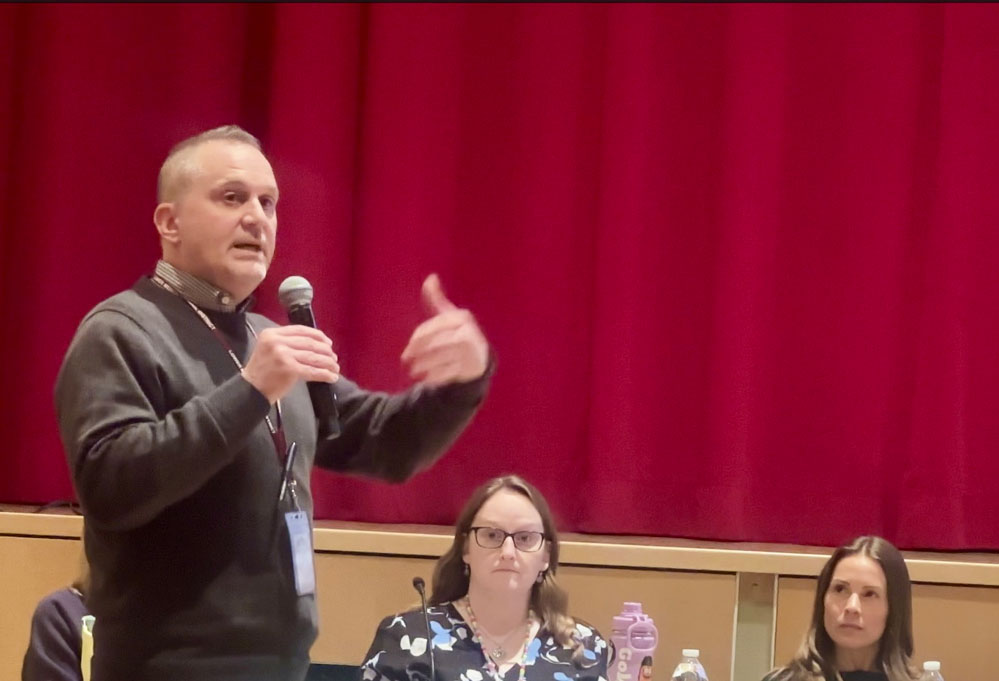
Superintendent Frank Ranelli told parents at a March community meeting at Harriton High School that they couldn’t opt out because it would mean opting out of the curriculum itself. What he didn’t explain is how the curriculum came to be built entirely around a device, without a vote, without meaningful parental input, and with filtering systems that, as of the April meeting, weren’t even operational yet for parents to use. He told parents those monitoring features were coming. He couldn’t say when.
It’s also worth noting that Lev has been organizing webinars for Lower Merion parents with experts including neuroscientist Jared Cooney Horvath, author of The Digital Delusion, who has written about the ways educational technology undermines the learning it claims to enhance.
Edtech sold itself as the great equalizer. In practice, it has often been the opposite, the great leveler downward. The kids whose parents can opt them into Kumon, piano lessons, and paper-based math learn differently than the kids who only ever touch a trackpad.
This Is the Model
What Lower Merion shows us is that the path forward for parents isn’t waiting for permission. It is this:
- Name the harm in specific, concrete terms. Not “screens are bad” but “my child made no measurable progress on DreamBox and had to learn math elsewhere, with pen and paper, at a private tutoring center.”
- Find the existing rules that protect you and use them before they get rewritten. Lower Merion’s own policy provided for opt-outs. Administrators are now trying to delete that language. The time to move is before the policy changes, not after.
- Organize at the classroom level, not just the district level. Twenty families in one grade are harder to dismiss than 200 signatures spread across a district. Jackie Mandell didn’t petition the superintendent. She called the parents in her daughter’s class.
- Speak in terms of outcomes, not ideology. Fine motor development. Math proficiency. The equity gap between kids with tutors and kids without. These are arguments that board members can’t easily wave away as political.
- And treat the outcome as non-negotiable. Not “we’d like to discuss this.” This is what’s happening for our kids.
The parents of Lower Merion didn’t wait for a politician to fix this or a study to be published or a nonprofit to hand them a roadmap. They got specific and organized. They refused to take no for an answer.
No one is coming to save our children. But 200 parents in a Philadelphia suburb just reminded us that we don’t need to wait. We can show up ourselves.
If this is happening in your district, we want to hear about it. Share this with every parent you know who has been told the system can’t accommodate their child’s needs.
New Arrival: “The COVID Code” by Zowe Smith
The Art of Liberty Foundation is proud to help promote and distribute a story they didn’t want told: The COVID Code: My Life in the Thrill Kill Medical Cult by Zowe Smith. More than a personal journey, this book documents the dark influence of Big Pharma over Western medicine. Zowe Smith, a former healthcare employee, shares a shocking insider’s account of the systemic fraud she witnessed behind hospital doors.
She uncovers how the current system is capable of murdering patients for profit while hiding its crimes by lying with statistics—specifically through the ICD coding system. Readers looking for truth, resistance, and redemption will find all three in these pages. Once you start reading, you won’t look at the medical establishment or public health the same way again.
Get Your Copy Today:
- Paperback Edition: Purchase The COVID Code now for $25.00 exclusively at ArtOfLiberty.org/Store.

Support the Art of Liberty Foundation’s Mission:
Go paid at the $5 a month level, and we will send you both the PDF and e-Pub versions of Etienne’s new book: To See the Cage Is to Leave It - 25 Techniques the Few Use to Control the Many, the PDF of Hayek for the 21st Century and a coupon code for 10% off anything in the https://artofliberty.org/store/.
Go paid at the $50 a year level, and we will send you a free paperback edition of The Covid Code – My Life in the Thrill Kill Medical Cult by Zowe Smith OR Etienne’s new book: To See the Cage Is to Leave It OR “Government” - The Biggest Scam in History… Exposed! OR a 64GB Liberator flash drive PLUS a paperback copy of Hayek for the 21st Century if you live in the US.
Support us at the $250 Founding Member Level and get a free paperback edition of The Covid Code – My Life in the Thrill Kill Medical Cult by Zowe Smith AND a signed high-resolution hardcover of “Government” - The Biggest Scam in History... Exposed! + Liberator flash drive AND a signed high-resolution hardcover of Etienne’s new book: To See the Cage Is to Leave It PLUS everything else in our “Everything Bundle” PLUS a paperback copy of Hayek for the 21st Century delivered domestically.


Comments ()