
Centralised Government vs Decentralised Governance
The state is one big risk management monopoly, and it's miserable at its job
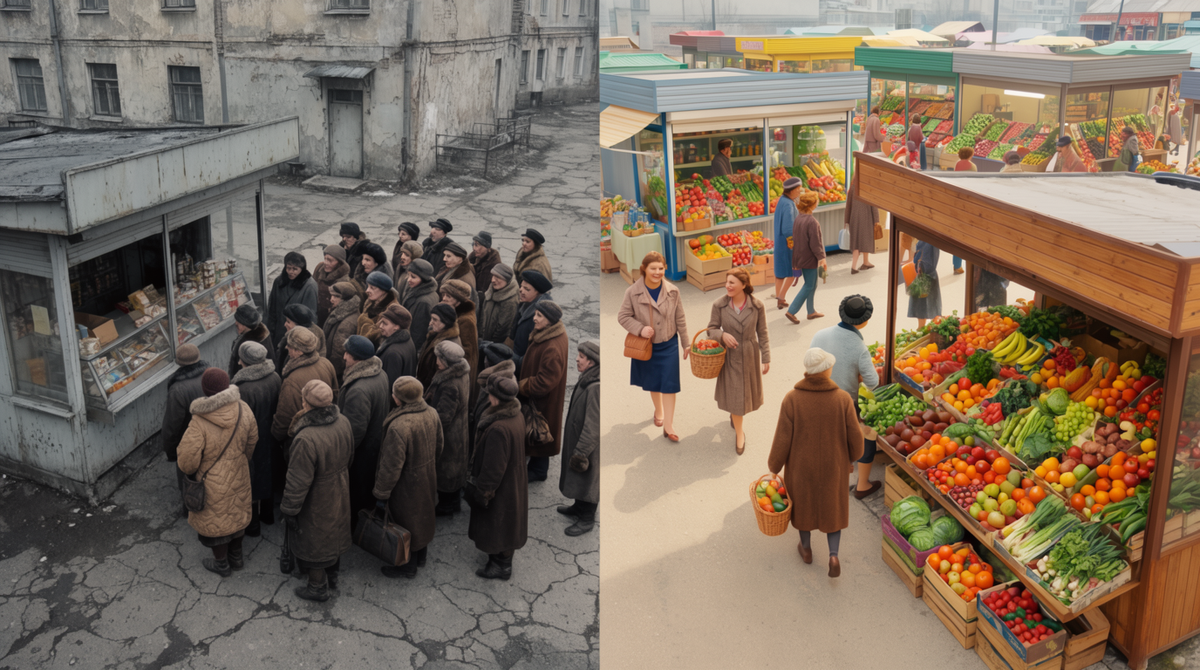
Centralised government, or the state, is a system founded on violence alone. Anything and everything the state does is driven by force or the threat of force. Whatever policy or “public good” the state presumes to impose on its populations, the imposition is backed by aggressive violence alone. Even fiat currency is “backed” by violence; violence that is paid for by fiat currency backed by the violence that backs it… in a chicken-and-egg psychopathy of a self-sustained system of nothingness, a bluff of authority.
Taxes are taken by force. Arbitrary laws are obeyed due to the fear of state violence, not the fear of missing privilege and opportunity in a community, or the fear of reciprocal violence by victims. We know this because almost all of state-defined “crimes” are victimless. You obey nonsense laws that keep useless people in pointless jobs.
The state does not function on incentives; only threats.
A threat takes what is already yours. An incentive offers you what you don’t have. The punishment of threat-based systems is the deprivation of what you already have. The “punishment” in incentive-based systems is the deprivation of an over-and-above privilege, an opportunity to gain something more than what you already have.
Even the most ardent statist will not voluntarily pay taxes unless forced to by the state he presumes to support. No statist in history has ever voluntarily paid more in taxes, even when he pretends to support more taxes. Sure, we see corrupt voters and lobbyists alike provide bribes in the euphemistic form of “donations”, but that is not the same as “voluntary taxation”. Taxes are supposedly towards a common good, while bribes are in exchange for a special benefit, always at the expense of others. And the state incentivises corruption because it is an unopposed, artificial monopoly of risk management services.
Centralised government — the state — is based on threat… not morality, not fairness, not logic, and definitely not voluntary incentive.
Instead, decentralised governance is based on incentives because there is no central monopoly of violence to impose anything; people are left alone to realise that it is in their best interest to come together to organise society, not via enforcement, but through incentives. When people are “left to their own devices”, they are driven by self-interest, which ends up maximising the collective self-interest. Self-interest is good because it takes into account the goodwill of others. It is only self-destructive people, those who aren’t driven by self-interest, who are chaotic and dangerous to others and, as a result, to themselves.
It is always in your best interest to play fair with those in the community you share. If you need something from people, be it a good, service, or desired behaviour, you give them the incentive to do it; it’s the only fair scenario where you should get what you want. And incentives are not blackmail or threats; they are over-and-above benefits. If the incentives you provide are not powerful enough, then you are humble enough to accept that you can’t earn what you want, at least for now. And in cases where you wish to deter violence against you, then you reserve the right to warn against the initiation of aggression, since you can reciprocate with defensive violence.
The only civilised way to make order is via incentives (when you need something for others) and via the deterrence provided by your ability to respond to an initiation of aggression against you.
There is no need for the state to initiate violence to impose things that incentives cannot drive. If incentives are not powerful enough, then that thing should not be forced. Even small children understand this. This alone is enough to disprove the deluded need in centralised government — the state.
Yes, there exist many people who cannot comprehend their own best interest. These are the anti-socials, the mentally diseased, the hopelessly traumatised, those who always turn to violence (either their own or outsourced to the state) to get what they want without considering others who must suffer their violence.
These anti-socials will always seek to dominate others over negotiating with others… This is why we have centralised government: because a critical mass of people, as they stand, are violent and seek to violently dominate others instead of providing incentives to get what they want. If you look at political rallies and the vitriol that characterises them, you witness the average voter’s desire, not to incentivise their desired behaviour, but to force it on others out of a deluded entitlement and presumption of “righteousness”.
But this is the thing: righteousness is not indicated by a perceived majority, nor some ancient text written by foreskin-obsessed illiterates who heard voices in their heads. A behaviour is deemed righteous when you can incentivise (not threaten) people to adopt it willingly, especially when those people have the free choice of alternative behaviours, and still select yours uncoerced. This is why morality cannot come from gods and demons, nor the state (which is the statist’s god). If anything, any “moral” framework that comes from a god or a state — meaning, it is enforced — is by definition meaningless.
How does decentralised government deal with people who prefer threats over violence? Very good question. Currently, we cannot have decentralised governance because the vast majority of people are traumatised enough to want rulers — the “good” parent they never had. We get rulers because we always turn to rulers. Elections are the state constantly asking permission to exist, and when we vote, regardless of what we vote for, we grant it that permission. And the fact that it needs it so frequently should tell you how weak its house of cards of perceived “authority” is.
But, in a world where people are less traumatised, and enough of us understand the superiority of decentralised governance, then those few who don’t would be pacified through the ‘fuck around and find out’ effect, or the warning of reciprocal, defensive violence. Aggressive violence — the unprovoked initiation of aggression that takes what is already yours — is immoral and counterproductive. But standing up for yourself against it — using defensive violence — is moral and productive. Not only that, but your intent and ability to use violence in response to the initiation of violence is the greatest deterrent to violence.
Statelessness is not disorder or chaos. Decentralised governance is superior to centralised government for the same reason that a variety of competing suppliers of a good or service always pressure those suppliers to provide better quality at a better price, and with less impact on the environment. Monopolies and oligopolies corner their markets, and this offers less for more. The more the pressure of competition, the more customers benefit — and even the suppliers, because they are pressured to be better. Customers vote with their money, not with a silly piece of paper, electing among identical, prechosen candidates with generic promises that aren’t legally binding, and thus, campaign promises are never kept. Yes, voting is the most obvious scam, yet people keep falling for it time and time and time again.
We demand market competition to protect consumers from monopolies, yet we empower a monopoly of the most important services: the state with the risk management services it provides. Why? Because we can’t conceive of markets with free competition providing such services in a decentralised manner? Irrelevant. Once, people couldn’t conceive how cotton could be picked without slaves, or how rain could be caused without child sacrifice and rain dances.
Everything the state provides is a service. Everything. From policing, lawmaking, and dispensing of justice, to public property management and private property registries. These are risk mitigation and management services.
Even now, with so little freedom left in markets to operate organically, we still see how insurance companies create rules and “punish” you when you fail to abide by them — when you pose a risk to those around you. And the punishment is a deprivation of a privilege, not of an entitlement you already have. Don’t want to play nice? Then we won’t insure you. And in a world without the state’s violence, people take their security into their own hands. The mall won’t let you enter unless you have some kind of insurance. This neighbourhood’s common-property roads won’t let you in either. But with a state, we assume risk is already taken care of, so we don’t take any initiatives — paralysis by government.
And instead of people taking their security into their own hands, the state forces you to live next door to ISIS monsters it imports from abroad, hands them free welfare for “reasons”, and grants them special business privileges so they can thrive at your expense. This is what the state is incentivised to do: keep the sheep fighting with each other, diffusing their energy through fear of each other, and never directing that energy towards those in positions of power. This is what monopolies do. And the state is the greatest, most corrupt monopoly of them all.
Yes, insurance is how we make “laws” without the state. We already get a glimpse of that in action, right now. The reason we don’t take more such initiatives is that we assume the government is already taking care of lawmaking, but it’s doing it in the worst possible way, ineffectively, inefficiently, and in a corrupt manner. And this is what the state is: one huge risk management service with an artificial monopoly, no less, which makes it corrupt, expensive, and useless.
Everything the state “offers” is risk management. Everything. Wouldn’t it make sense to break down the supplier of those risk management services to numerous competing suppliers so that they feel “threatened” by their competition, and are thus forced to be better to their consumers? A monopoly has little incentive to play nice with its consumers. On the contrary, a monopoly has every incentive to keep gaslighting consumers into believing there can be no competition in the services it provides.
People respond to incentives more predictably than they do to threats.
Every day that passes under centralised government is an atrocity and an embarrassment for humanity.
The Best “Go Paid” Deal on Substack! You Get REAL Stuff!!
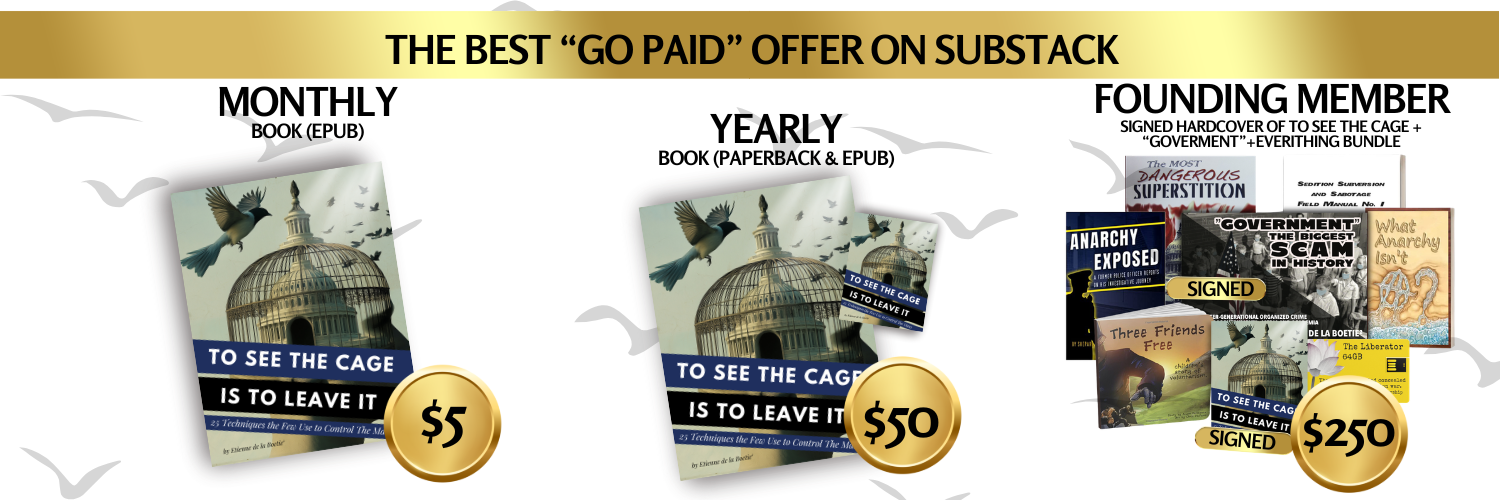
Go paid at the $5 a month level, and we will send you both the PDF and e-Pub versions of Etienne’s new book: To See the Cage Is to Leave It - 25 Techniques the Few Use to Control the Many and a coupon code for 10% off anything in the https://artofliberty.org/store/.
Go paid at the $50 a year level, and we will send you a free paperback edition of Etienne’s new book: To See the Cage Is to Leave It - 25 Techniques the Few Use to Control the Many OR “Government” - The Biggest Scam in History… Exposed! OR a 64GB Liberator flash drive if you live in the US. If you are international, we will give you a $10 credit towards shipping if you agree to pay the remainder.
Support us at the $250 Founding Member Level and get a signed high-resolution hardcover of “Government” - The Biggest Scam in History... Exposed! + Liberator flash drive + a signed high-resolution hardcover of Etienne’s new book: To See the Cage Is to Leave It - 25 Techniques the Few Use to Control the Many + everything else in our “Everything Bundle” of the best in voluntaryist thought delivered domestically. International pays shipping. Our only option for signed copies besides catching Etienne @ an event.


Comments ()