
High schools are losing the struggle to block pot—even during class
BRENTWOOD, Calif.—It was 10:09 and 22 seconds on a Friday morning at Liberty High School when an alert dinged on James Geis’s phone: “High Vape Index.”

BRENTWOOD, Calif.—It was 10:09 and 22 seconds on a Friday morning at Liberty High School when an alert dinged on James Geis’s phone: “High Vape Index.”
He dashed out of the administrative building and jumped into a golf cart, racing across the school’s sprawling campus to the location identified in the alert, the “E” girls’ bathroom. Within minutes he was outside the door.
A girl walked out. “Can I talk to you? Was there anyone else in there with you?” said Geis, one of the school’s campus supervisors tasked with combating marijuana use—or what many Liberty students call “narcs.”
Two more girls walked out. Geis told the students that a vape sensor went off. “What would happen if I ran?” one said.
“We would get you when you come back,” Geis responded.
She didn’t run. Geis ushered the students to a conference room where Liberty’s principal, Efa Huckaby, searched their backpacks. Hand sanitizer, folders, perfume, a pair of black leggings. Empty chips bags. He had the girls, two seniors and one freshman, turn their jeans’ pockets inside out and patted down the hoods of their sweatshirts. One of the students spoke slowly and seemed glassy-eyed.
Another campus supervisor, Brad Ainsworth, hung back to search the empty bathroom. Eventually, he found an empty box for a vape cartridge stuffed under a bag lining a metal trash receptacle.Liberty High is on the front lines of a battle to keep weed out of American high schools. It’s an uphill one. California legalized medical marijuana in 1996, the first state in the country to do so. Recreational cannabis has been legal in the state since 2016, with retail sales beginning in 2018, when Liberty High’s current seniors were still in elementary school. Now, 24 states plus Washington, D.C., have legalized marijuana for recreational use.
While the legal age to buy recreational marijuana is 21 in California (It’s 18 for medical marijuana), students said it is relatively easy to get from older siblings, friends and acquaintances. Dispensaries often offer delivery, requiring adults to show valid ID.
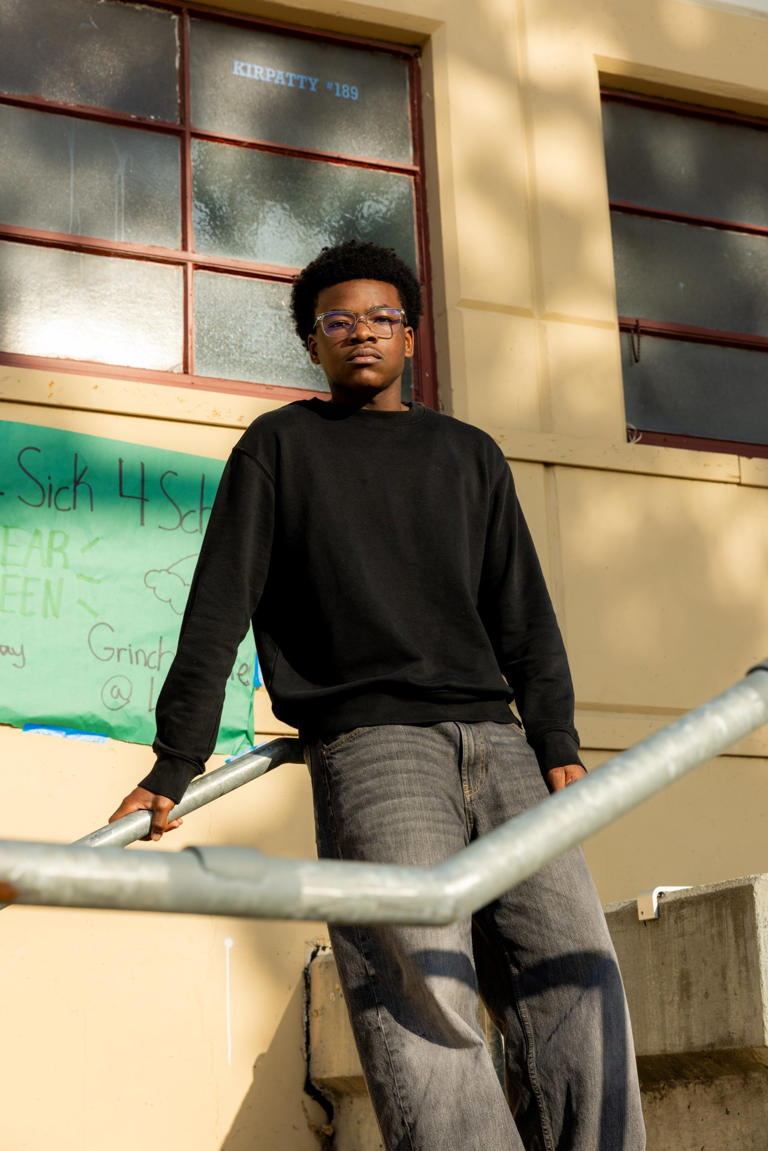
Legalization has shifted how cannabis is perceived, from a way for stoners to get high to a mainstream health and wellness tool. Cannabis companies now market their wares as treatments for anxiety, pain and sleep problems. Edibles in cute packaging and THC vapes in flavors like “strawberry cough” and “Zkittles” (a play on the candy) can make marijuana seem safe, stylish and fun.
Weed is “seen as organic. It’s all-natural,” said Will Trimua, a 17-year-old Liberty High senior, about many of his peers’ views. And unlike nicotine, doctors sometimes recommend it, “so why should it be bad then?” added Trimua, who says he doesn’t partake.
About 26% of 12th-graders and 8% of eighth-graders said they’d used cannabis in the past year, according to data from a 2025 University of Michigan survey. That is down from about 36% and 12% reported in the 2019 survey.
But principals say they are seeing more of the drug on campus, and it is creating health and safety problems.
“It’s just everywhere in the community. That’s really, really hard for schools,” said Chris Young, principal at North Country Union High School in Newport, Vt. Marijuana, he said, used to be something that kids did at parties on the weekend, but that changed after recreational sales began in Vermont in 2022.
The schools’ battle against cannabis is happening as a growing body of scientific research reveals how dangerous THC, the main psychoactive component of marijuana, can be for the teenage brain. Studies have found that the regular use of marijuana by teens is linked to poor performance in school and deficits in attention and memory. The commercial products now sold in states that have legalized cannabis are much stronger than the marijuana commonly used in decades past, researchers said.
Vaping is the most common way teens use marijuana: In 2024, 67% of 12th-graders and 57% of eighth-graders who used it, vaped it. That is up from 58% and 48%, respectively, in 2021. Flavored vapes in particular are gaining traction among teens, in part to go unnoticed, since the flavors mask marijuana’s distinctive smell.
Schools like Liberty are stepping up detection and deterrence, which some school leaders said has helped curb on-campus use. But those efforts, like Liberty’s vape sensors and the manpower dedicated to policing infractions, add costs and other burdens.
Gummy worms?
DeWitt Clinton High School in New York City has limited the kind of food students are allowed to bring because teens were smuggling THC edibles in with their lunch and snacks, said Pierre Orbe, the school’s principal. School staff now confiscate homemade baked goods and suspicious candy.
“Just looking at it, I don’t know what it could be. It could be gummy worms or it could have something in it,” Orbe said.
In the aftermath of Liberty’s E bathroom bust, Huckaby was pretty sure that the glassy-eyed girl was high. She was sent to a room to be monitored by school staff. But there was no way to definitively tie the box to the girls. It could have been there for hours or days, and no vape cartridge was found.

Students at Liberty have been known to hide contraband in their underwear, their bras, places they know school staff can’t look. Often kids flush the evidence. When maintenance workers tried to fix a blocked toilet recently, they fished out about a dozen vape cartridges and pens from the plumbing.
“It’s cat and mouse,” Huckaby said. When Liberty students these days are caught with substances, he said, it is just as likely to be cannabis as nicotine.
The girls’ parents would be informed that the kids were in the bathroom when a vape sensor went off. But that’s the only punishment.
‘Hit me up’
Brentwood is a middle-class town of about 64,000 at the edge of the San Francisco Bay Area, once an agricultural center, now home to commuters who work in tech and other industries. The city government has banned cannabis retail shops. But the town of Antioch, where eight licensed cannabis retailers now operate, is less than a 15-minute drive away.
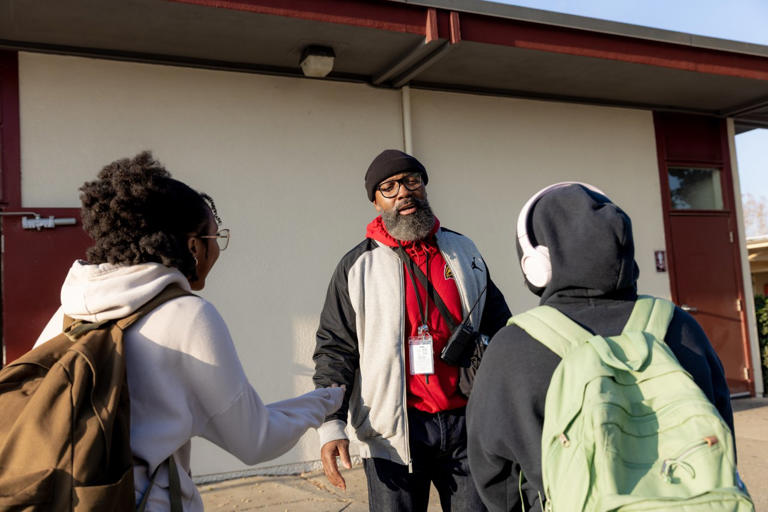
Some teens buy from peers who advertise THC vapes, the most popular form, students said, on their Snapchat stories. The sellers, dubbed “plugs”—since the sources can supposedly plug you into what you want—often tell potential buyers to “HMU” or “hit me up,” students said.
Huckaby said that vaping weed and nicotine in Liberty’s bathrooms took off in 2021 and 2022, the years after kids returned to school from Covid-era remote learning. Staff and students described walking into bathrooms during that time and seeing crowds of people engulfed in plumes of smoke.
“It was a party in the bathroom,” says Kamiyah Blunt, an 18-year-old senior, who was a freshman at the time. “It was crazy.”

Students who didn’t want to join in started avoiding the bathrooms. Some went off-campus, to restrooms at a nearby park or at the Safeway grocery store. “Our students were coming in and saying ‘I don’t feel safe using the restrooms because there are students that are in there that are vaping, that are doing all this other stuff that’s just not OK,’ ” Huckaby said.
Huckaby had heard it from his own daughter, who was a student at Liberty then. The 56-year-old father of three grew up in Cupertino, Calif., the home of Apple. He worked briefly in the hotel business before moving to teach English and history to middle-schoolers.
“Not to be corny, but it just fueled my soul,” Huckaby said. He’s been at Liberty for five years, where his office displays photos of his favorite Golden State Warriors players and a neon “Believe” sign, a nod to the show “Ted Lasso.” He was named California principal of the year by the National Association of Secondary School Principals in 2025.
By 2023, Huckaby, his staff and many students had had enough. The staff started doing “stings.” About once a week, when a bathroom was unusually crowded, staff would send the congregating students to a nearby room to question what they were doing. “Nobody was using the facilities,” Huckaby said.
Huckaby then began stationing Liberty staff in front of every bathroom, letting in only as many people as there were stalls. “I started jokingly saying that I’m the highest-paid bathroom attendant,” Huckaby said.
The school, which has about 2,750 students, started limiting restroom hours, locking the doors during chunks of class time and after school. Students are now required to have bathroom passes if they want to go during class.
Then, later in 2023, Liberty installed the sensors, 11 in all, paired with cameras aimed at the bathroom entrances. If a campus supervisor can’t respond to an alert at the time a sensor goes off, school staff can watch video to see who came and went during the time when the vape index was high. Video evidence is enough to warrant a search, Huckaby said.

Verkada, the company that makes the vape sensors Liberty uses, said sales of its sensors have surged 76% in the past year. The devices are priced at about $1,000 each and require another $249 yearly in additional licensing fees. Cameras start at about $500 each, plus a $219 yearly subscription fee. The company has created a new algorithm it says can distinguish between nicotine and THC vapor, a feature it is now testing in a handful of schools.
The National Association of Secondary School Principals, an advocacy group, has brought school administrators and students to Washington, D.C., to push for funding to help schools combat on-campus drug use, among other initiatives.
Depression and suicidal thoughts
The percentage of teens who view marijuana as dangerous dropped dramatically between 2000 and 2021 before rising somewhat in recent years. In 2000, 58% of 12th-graders said regular use came with “great risk of harm.” That number slid to 22% in 2021, before rising to 36% in 2024, according to data from the University of Michigan’s Monitoring the Future study.
Research is finding that THC appears to affect the development and function of the hippocampus, which is involved in memory; the amygdala, which helps process emotion; and the cerebellum, which is involved in motor coordination and the perception of time.
Starting to use marijuana before age 18 significantly increases the odds of developing cannabis-use disorder, said Dr. Jonathan Avery, vice chair for addiction psychiatry at Weill Cornell Medicine in New York. The disorder is characterized by craving cannabis and an inability to cut down on use, among other issues. Some research has found a link between teens’ marijuana consumption and the development of depression and suicidal thoughts.
At Liberty, cannabis has become more popular, while nicotine is seen as unhealthier. “I think a lot of it is self-medication,” Huckaby said, noting anxiety and school and social pressures.

Liberty students say some teens use weed as a way to look cool and fit in with friends who do it. But some use it as a way to cope with problems at school and home, said Erin Chandler, an 18-year-old senior. “There’s a need for something to numb those feelings,” she said.
At Liberty, students’ first cannabis possession offense carries an automatic one-day in-school suspension. Students also complete a cannabis education program from Stanford University. Last year, the school added a new five-day suspension from extracurricular activities for cannabis possession, as well as several other infractions.
It’s a way to get the campus leaders—football players, theater kids, student council members—to follow the rules, which then influences everyone else, Huckaby said.
The approach is working, said Jaxon Bell, an 18-year-old senior who is on the football team. “I think that almost hits harder, just thinking about letting your teammates down,” he said.
The bathroom situation is better. On a recent Thursday, the vape sensors went off 25 times. That’s a typical number these days, though down from the 40 or 50 that was the norm in 2023, Huckaby said. Most students are back to using the school bathrooms for their intended purpose.
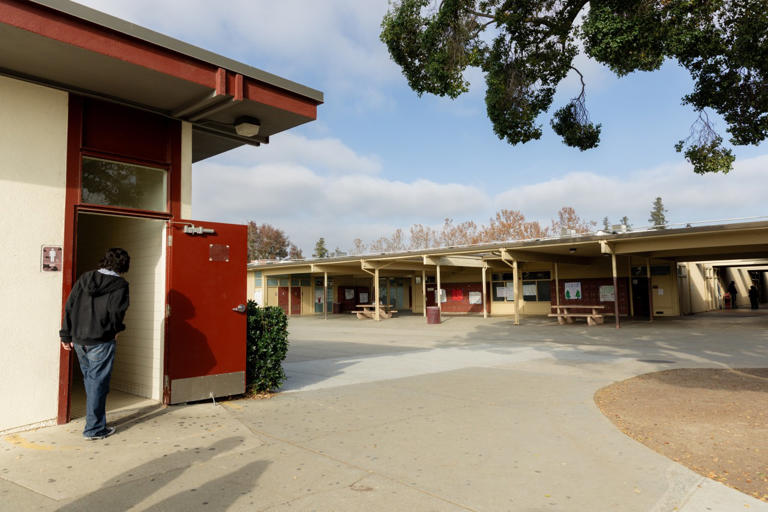
But some Liberty students said they don’t think weed use has really gone down. The school’s focus on the bathrooms has just pushed it to other spots, both on campus and off. A major hot spot for weed and nicotine is the stairwell of a parking garage next to the school. “Anytime you go over there, I see a herd of them puffing,” said Blunt, the Liberty senior.
Some teens are brazen enough to do it in class, Blunt said, while a group of her fellow students nodded in agreement. Some will hide vape pens in the sleeves of their shirts and hoodies and take a discreet puff when the teacher isn’t looking.
And if the teacher is showing a video in class, it is a free-for-all, said Trimua. “If the lights are off, the smoke is on,” he said.
Get a paperback copy of Hayek for the 21st Century for FREE
As part of the Art of Liberty Foundation’s Tribute to Nobel Laureate F.A. Hayek, in cooperation with the Mises Institute and the US Justice Charitable Foundation who provided free copies, the Art of Liberty Foundation is helping promote and distribute the book to anyone who “Goes Paid” as an annual member on Substack OR makes a purchase at ArtOfLiberty.org/Store.

Go paid at the $5 a month level, and we will send you both the PDF and e-Pub versions of Etienne’s new book: To See the Cage Is to Leave It - 25 Techniques the Few Use to Control the Many, the PDF of Hayek for the 21st Century and a coupon code for 10% off anything in the https://artofliberty.org/store/.
Go paid at the $50 a year level, and we will send you a free paperback edition of Etienne’s new book: To See the Cage Is to Leave It - 25 Techniques the Few Use to Control the Many OR “Government” - The Biggest Scam in History… Exposed! OR a 64GB Liberator flash drive PLUS a paperback copy of Hayek for the 21st Century if you live in the US. If you are international, we will give you a $10 credit towards shipping if you agree to pay the remainder.
Support us at the $250 Founding Member Level and get a signed high-resolution hardcover of “Government” - The Biggest Scam in History... Exposed! + Liberator flash drive + a signed high-resolution hardcover of Etienne’s new book: To See the Cage Is to Leave It - 25 Techniques the Few Use to Control the Many PLUS everything else in our “Everything Bundle” of the best in voluntaryist thought PLUS a paperback copy of Hayek for the 21st Century delivered domestically. International pays shipping. Our only option for signed copies besides catching Etienne @ an event.


Comments ()