
NexPhone revisits the long-running dream of combining your phone and laptop
After a decade of false starts across the industry, Nex Computer revisits the idea of replacing your laptop with a smartphone.
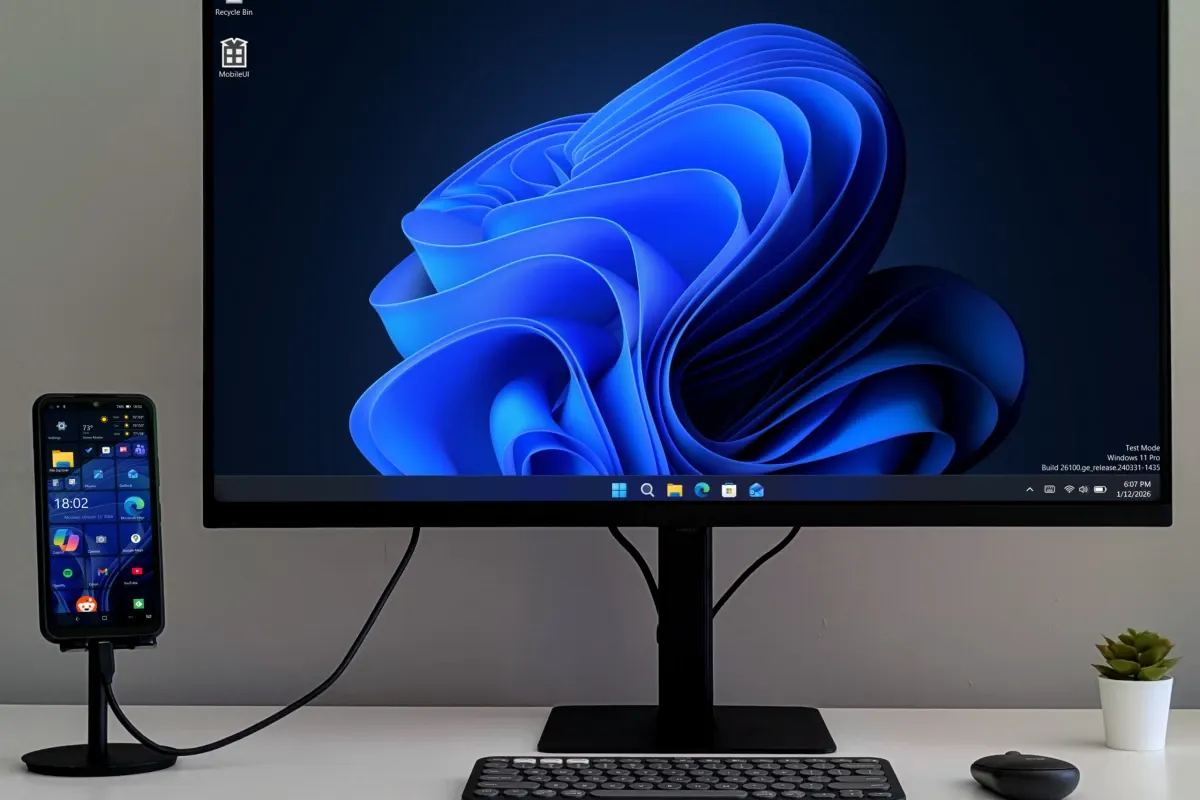
After a decade of false starts across the industry, Nex Computer revisits the idea of replacing your laptop with a smartphone. By combining Android, Linux, and Windows in one device, the NexPhone may have made the vision a reality.
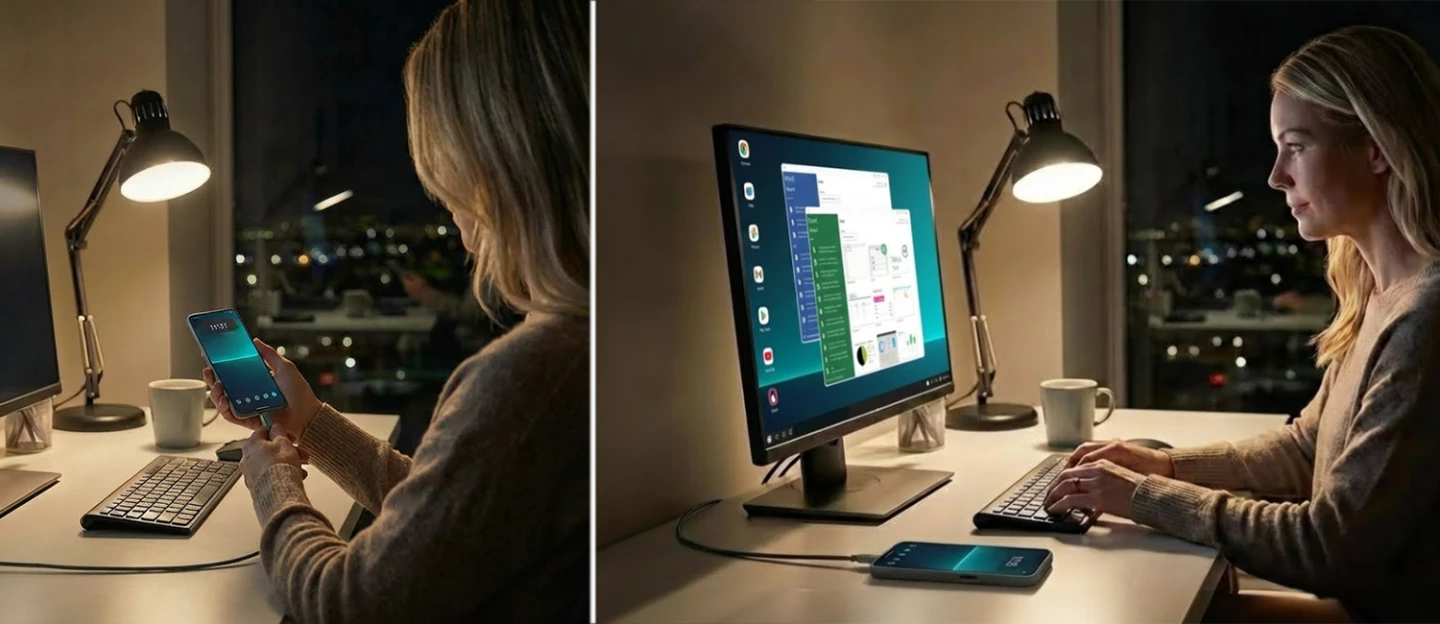
For years, technologists have floated a simple, elegant idea: what if your mobile phone could become your computer whenever you needed it? Imagine it being your desktop PC at home, a laptop replacement when you travel, and a phone for everything in between.
This idea is the driving force behind the NexPhone, a newly announced smartphone from Nex Computer that aims to combine phone and PC into a single device. It does this by shifting roles depending on context: it runs Android as a daily smartphone, can launch a full Linux (Debian) environment on demand, and can even dual-boot into Windows when needed.
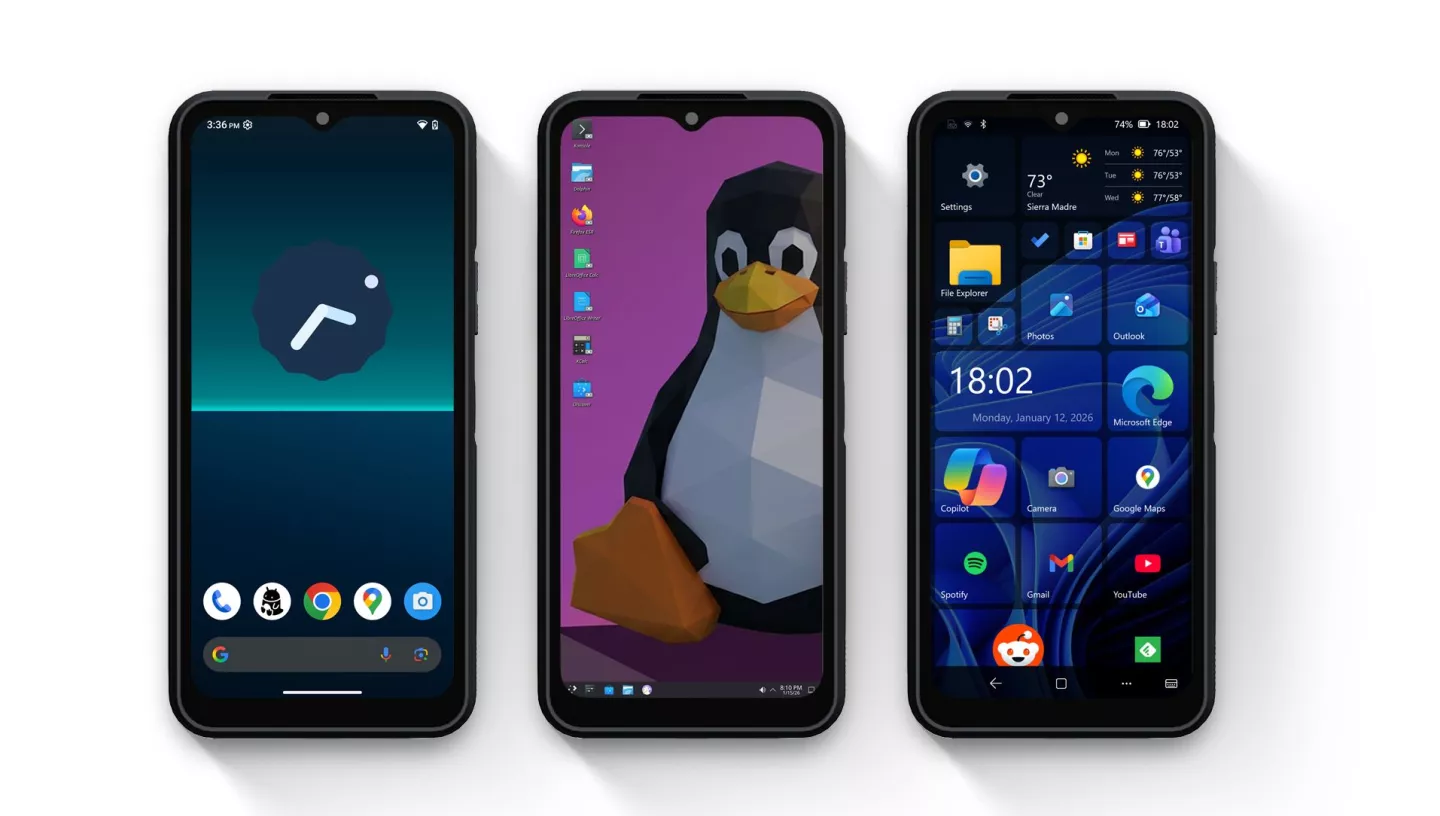
This isn’t a sudden pivot, though; the NexPhone is the culmination of a pursuit that started more than a decade ago. The announcement is intriguing, to say the least. Is this idea still just an ambitious experiment? Or is it the most practical iteration of “phone as your computer” yet? We think it’s the latter.
Back in 2012, the concept of a phone that could dock into larger screens and become a full computer was a compelling one – but it was a little ahead of its time. Mobile chips struggled under sustained workloads, display standards were fragmented, and running desktop-grade software on a phone felt more like a workaround than an organic solution.
Fourteen years later, the pieces have finally fallen into place, according to Nex Computer founder Emre Kosmaz. “A few things converged that simply weren’t ‘ready’ a decade ago,” he says, mentioning factors including performance-per-watt, modern mobile chipset capabilities, and improved USB-C display and I/O standards.
Technological advancements aside, there was a cultural factor at play, too. The way people work today has shifted: remote workflows, cloud documents, and solutions to make our many devices feel aligned are mainstream.
The gap between vision and reality has been filled by the NexDock. Over six generations, Nex Computer shipped laptop-style shells that let smartphones power a full keyboard, screen, and trackpad. This quietly proved there was real demand for such a product.
The NexPhone takes that lesson a step further. “The biggest advantage is continuity,” says Kosmaz. “One device, one set of apps and files – no syncing dance.” A Chromebook may be convenient, but it’s still a separate computer. The NexPhone’s purpose is to collapse that distinction entirely. But despite its capabilities, Kosmaz and Nex Computer acknowledge that the NexPhone isn’t a solution for everyone, and will fall short for some.
Sustained heavy workloads like long video renders or large code compiles remain better suited to traditional laptops and desktops with more thermal headroom. Some niche professional software and peripherals are also simply easier to manage in a conventional desktop ecosystem. “Being honest about that is important,” says Kosmaz. “There are still workflows where a traditional laptop is the better fit.”
At the same time, this gap is narrower than it once was. For work that’s already browser-based, communication-heavy, or built around cloud tools, the NexPhone can cover a surprising amount of daily computing. As mobile chipsets continue to rapidly improve, according to Kosmaz, “the gap keeps shrinking.”
The NexPhone may be a poor fit for some – particularly users who rely on high-end, always-on desktop setups. But for many others, it’s an appealing prospect: one always-connected device, fewer devices and upgrades, less clutter, and less electronic waste.
The NexPhone won’t replace every laptop, but it may finally bring the concept into the mainstream, and make it feel normal rather than novel. The device is priced at US$549, with a $199 refundable deposit to reserve a unit ahead of its Q3 2026 launch.
The Everything Bundle – The Ultimate Voluntaryist Sampler and/or Homeschool Curriculum
The Everything Bundle Includes THREE (3) books from Larken Rose!

The Everything Bundle is the ULTIMATE sampler of the best of voluntaryist thought. It is $115 in the Art of Liberty Foundation Store OR you can get one free including signed, personalized high-resolution hard cover versions of BOTH of Etienne’s books by “Going Paid” as a Founding Member of the Substack.
Simply “Go Paid” or Upgrade and we will reply with details. Domestic shipping is included, International includes $10 S&H credit and we will reply with total cost.
The Everything Bundle – The Ultimate Sampler of Liberty
“Government” – The Biggest Scam in History… Exposed! by Etienne de la Boetie2 –
To See The Cage Is to Leave It – 25 Techniques the Few Use to Control the Many by Etienne de la Boetie2
Anarchy Exposed! – A former police officer reports on his investigative journey by Shepard the Voluntaryist and Larken Rose
The Most Dangerous Superstition by Larken Rose
Sedition, Subversion and Sabotage – Field Manual #1 by Ben Stone, The Bad Quaker, and Ken Yamarashi
What Anarchy Isn’t – A short pamphlet by Larken Rose… The perfect introduction to peaceful anarchy – Free On-line Version Here
Three Friends Free – A Children’s Story of Voluntaryism
The Liberator is a 64GB wafer flash drive filled with books in PDF/ePub including BOTH of Etienne’s books: “Government” AND To See the Cage is to Leave It, documentaries, podcasts, MP3s, short videos, and music from the truth movement’s leading artists. New 2025/2026 V2.3 Version!! The credit card-sized format makes it convenient to keep in your wallet to share and copy easily. You are authorized and encouraged to copy your Liberator for your friends AND the Liberator includes stickers that print on readily available Avery label paper to wrap commodity 64GB flash drives available on eBay for as little as $3 each.


Comments ()