
Saudi Analyst Claims US Diverted ALL Anti-Missile Defense Away from OUR Troops & Allies to Israel
Jim Crenshaw Breaks Down the Ramifications..


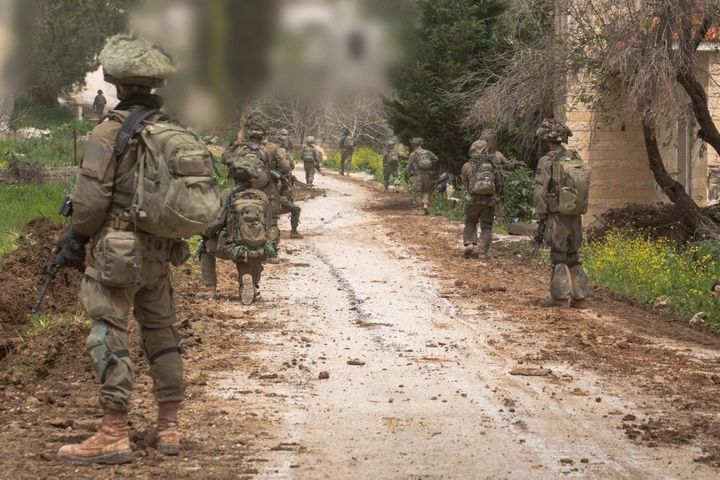
Saudi political analyst Suleiman Al-Aqili has warned that Gulf countries hosting US military bases are at risk, as America prioritizes protecting Israel amid the ongoing Iran-US-Israel conflict.
“America has abandoned us, and focused its defense systems on protecting Israel, leaving the Gulf states that host its military bases at the mercy of Iranian missiles and drones,” Al-Aqili told Al Jazeera.
Jim Crenshaw:
A senior Saudi official just told Al Jazeera, on the record, that the United States abandoned the Gulf states and redirected its entire air defense shield to protect Israel while Iranian missiles were raining down on American military bases across the region. Direct quote: “The United States abandoned us and redirected its air defense to protect Israel. They left all the Gulf states that host American military bases at the mercy of Iranian strikes.”
Read that transaction back to me slowly. Saudi Arabia hosts Prince Sultan Air Base. Bahrain hosts the entire United States’ Fifth Fleet. Qatar hosts Al Udeid, the largest American installation in the Middle East. Kuwait hosts Camp Arifjan and Ali Al Salem Airbase. The UAE hosts Al Dhafra. These countries did not just welcome America. They built entire military cities around American personnel. They spent decades integrating American defense architecture into their national security.
And when the moment came, when Iranian ballistic missiles and suicide drones were physically screaming toward those bases, Washington reportedly pulled the Patriot batteries off the Gulf and pointed them at Tel Aviv. This is not a diplomatic spat. This is a senior official from America’s most strategically important Arab partner saying out loud to international media during a live war: “You took the protection money and ran.”
Three American soldiers are dead in Kuwait. Dubai got hit. The Fifth Fleet headquarters in Bahrain took fire. An Aramco refinery in Saudi Arabia is burning. And somewhere in the middle of all this chaos, someone in Washington made the calculation that Israel’s skyline matters more than American service members sitting on bases that their own president turned into targets.
That is the story tonight. Not the missiles. Not the drones. The math. Here is what this accusation actually means in dollars, because apparently that is the only language Washington understands anymore.
According to Bloomberg, the UAE burned through a significant chunk of its entire interceptor missile stockpile—a stockpile that took years to build—in just forty-eight hours. Kelly Grieco, a senior fellow at the Stimson Center, ran the numbers. Iran launched drones and missiles worth an estimated $177 to $360,000,000 at the UAE alone. The UAE spent between $1,450,000,000 and $2,280,000,000 trying to shoot them down. That is a five-to-10-to-one cost ratio.
For every single dollar Iran spent on a Shahed kamikaze drone, the UAE spent $20 to $28 destroying it. You know what that is? That is a business model designed to bankrupt the defender. Iran figured out something that apparently nobody at the Pentagon thought was important enough to solve: cheap offense beats expensive defense every single time when you are playing the long game.
And while the Gulf states were hemorrhaging interceptors at a rate that made their defense ministers physically ill, the United States was reportedly moving its own Patriot and THAAD batteries—the good stuff, the stuff these countries paid billions to integrate with—toward Israel. Not toward the bases where American troops were stationed. Toward Israel.
Middle East Eye is now reporting something even more explosive. According to a Western official and a former U.S. official familiar with the discussions, the United States is stonewalling requests from Gulf states to replenish their interceptor stocks. At least one Gulf nation that came under direct Iranian attack asked Washington about refilling their depleted air defenses and was brushed off. A second Gulf state responded to American requests to use its air bases with a pointed counter-question: “What about your commitment to our air defense systems?”. The answer, apparently, was silence.
Stop and absorb that arithmetic for a second. The United States asked Gulf countries to host its military bases. The Gulf countries agreed. The United States then launched a war from those bases: Operation Epic Fury, a joint U.S.-Israeli strike campaign against Iran without asking for Gulf permission. Iran retaliated against those bases. The Gulf states used their own interceptors to defend themselves and the American personnel stationed on their soil. And now, when those interceptors are running dry, the United States is ghosting them on the refill.
There is a word for that arrangement, and it is not alliance. An alliance means mutual defense. What this looks like is a landlord who burns down the building and then refuses to pay for the fire damage because he is too busy fireproofing his other property across town.
And it gets worse. The Washington Post reported on February 28 that the decision to launch this entire war, Operation Epic Fury, came after weeks of lobbying by an unusual pair of allies: Israel and Saudi Arabia. Both countries pushed Trump to strike Iran. U.S. intelligence assessments saw no imminent threat, but the regional allies argued now was the time. Saudi Arabia wanted Iran’s nuclear ambitions crushed. Israel wanted the same, plus leadership decapitation. Trump gave them both what they wanted.
And then, when Iran hit back, he apparently gave only one of them the defensive shield. Saudi Arabia pushed for this war. Let me be absolutely transparent about that. Crown Prince Mohammed bin Salman, according to multiple reports, told other Gulf leaders that Iran’s retaliation was actually less intense than feared, and urged calm. But behind closed doors, Riyadh is reportedly seething, not because they did not expect consequences, but because they expected the consequences to be shared.
They expected the country that dragged them into this mess to at least stand in front of the bullets alongside them. Instead, what they got is this: The Wall Street Journal reports that the United States fired roughly 150 THAAD interceptors in a single day during the June 2025 strikes to defend Israel, about a quarter of America’s entire stockpile. Each interceptor costs approximately $15,000,000. Production cannot keep pace. And now those same systems are being spread across multiple countries simultaneously, with Israel getting priority allocation while American bases in the Gulf take incoming fire.
Look at the casualty board if you still think this is abstract. Three U.S. Army soldiers deployed to Kuwait are dead. They were logistics personnel, supply and operations, at a tactical operations center. They did not sign up for a frontline war against Iran. They signed up to manage cargo. Five more Americans are seriously wounded. In the UAE, three civilians are dead. In Kuwait, one civilian killed. Sixteen injured in Qatar.
Dubai’s Jebel Ali Port, one of the busiest commercial harbors on Earth, caught fire from interceptor debris. An Iranian drone clipped the outer facade of the Burj Al Arab, one of the most recognizable buildings on the planet. Kuwait’s international airport took a direct drone hit. Workers were injured. The terminal was damaged.
And here is the number that should haunt every defense analyst: Iran has an estimated drone fleet of 80,000 to 100,000 Shaheds across all variants, with production continuing at roughly 500 units per month. At full capacity, that translates to sustained waves of over 2,500 drones daily. The UAE’s 92% interception rate is extraordinary, according to Grieco. But even at 92%, 8% of 2,500 drones per day means 200 getting through. Every day. For weeks.
Nobody in the Gulf has enough interceptors for that. And the one country that manufactures the interceptors that could save them is currently stonewalling their phone calls because it is too busy burning through its own stockpile protecting someone else.
The petrodollar system is one of those things nobody thinks about until it cracks. Since the 1970s, the deal between Washington and Riyadh has been one of the simplest transactions in geopolitical history: You sell your oil in dollars, we keep you safe. Every barrel of oil priced in dollars creates global demand for American currency. That demand keeps the dollar strong, keeps borrowing cheap, keeps the entire American financial system afloat. It is the invisible engine under every mortgage rate, every treasury auction, every credit card swipe in America.
That deal just got a public audit. A senior Saudi official went on Al Jazeera, not a back channel, not a leaked cable, not a background briefing—a broadcast interview on the most watched Arabic language news network on the planet—and said: “America abandoned us.”
Those three words carry more destructive potential than any Iranian missile, because the petrodollar was never a signed treaty. It was a handshake, and handshakes only work when both sides believe the other will show up. If you are the Saudi government right now, and you just watched the United States pull its defensive umbrella away from your airspace to cover Israel while your own oil refineries burned, you are making phone calls. Not angry phone calls, quiet ones. To Beijing, to Moscow, to anyone who will listen to a pitch that starts with: “We are open to discussing alternative settlement currencies for energy transactions.”
That is not a threat. That is rational self-interest from a country that just learned the hard way that its fifty-year security partner has a favorite child, and it is not them. Three American soldiers are in body bags tonight because they were sitting on a base that their own government could not be bothered to adequately protect. Gulf allies who spent decades and trillions of dollars building their entire defense posture around American hardware are now being told to figure it out on their own.
And the country that started this war, the one that launched Operation Epic Fury from Gulf bases without Gulf consent, is now too busy to answer the phone when its partners ask for more ammunition. That is not foreign policy. That is a protection racket where the protection disappeared the moment it was needed most. And every country in the world that hosts an American military base is watching this right now and asking themselves the only question that matters: “If they did this to Saudi Arabia, what exactly are they going to do for me?”.
The missiles will stop eventually. The trust deficit will not.
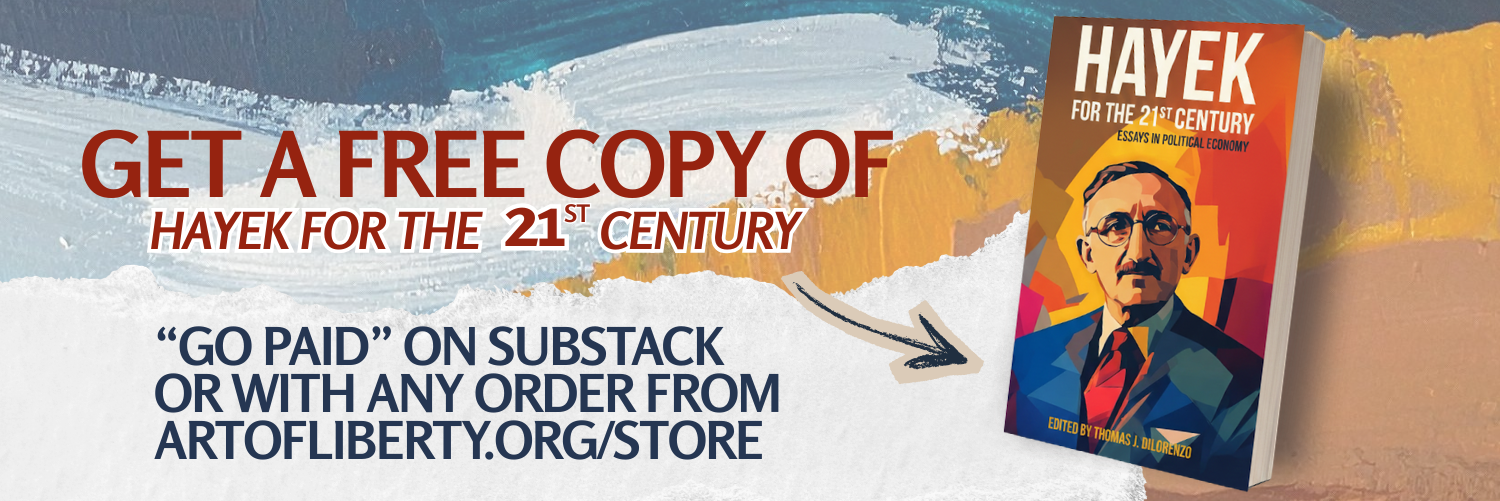
Get a paperback copy of Hayek for the 21st Century for FREE
As part of the Art of Liberty Foundation’s Tribute to Nobel Laureate F.A. Hayek, in cooperation with the Mises Institute and the US Justice Charitable Foundation who provided free copies, the Art of Liberty Foundation is helping promote and distribute the book to anyone who “Goes Paid” as an annual member on Substack OR makes a purchase at ArtOfLiberty.org/Store.
Go paid at the $5 a month level, and we will send you both the PDF and e-Pub versions of Etienne’s new book: To See the Cage Is to Leave It - 25 Techniques the Few Use to Control the Many, the PDF of Hayek for the 21st Century and a coupon code for 10% off anything in the https://artofliberty.org/store/.
Go paid at the $50 a year level, and we will send you a free paperback edition of Etienne’s new book: To See the Cage Is to Leave It - 25 Techniques the Few Use to Control the Many OR “Government” - The Biggest Scam in History… Exposed! OR a 64GB Liberator flash drive PLUS a paperback copy of Hayek for the 21st Century if you live in the US. If you are international, we will give you a $10 credit towards shipping if you agree to pay the remainder.
Support us at the $250 Founding Member Level and get a signed high-resolution hardcover of “Government” - The Biggest Scam in History... Exposed! + Liberator flash drive + a signed high-resolution hardcover of Etienne’s new book: To See the Cage Is to Leave It - 25 Techniques the Few Use to Control the Many PLUS everything else in our “Everything Bundle” of the best in voluntaryist thought PLUS a paperback copy of Hayek for the 21st Century delivered domestically. International pays shipping. Our only option for signed copies besides catching Etienne @ an event.
Comments ()